The Alexandria Quartet

The Alexandria Quartet

Lawrence Durrell

Literature & Fiction / Travel / Memoir

Lawrence Durrell's series of four novels set in Alexandria, Egypt during the 1940s. The lush and sensuous series consists of Justine(1957) Balthazar(1958) Mountolive(1958) Clea(1960). Justine, Balthazar and Mountolive use varied viewpoints to relate a series of events in Alexandria before World War II. In Clea, the story continues into the years during the war. One L.G. Darley is the primary observer of the events, which include events in the lives of those he loves and those he knows. In Justine, Darley attempts to recover from and put into perspective his recently ended affair with a woman. Balthazar reinterprets the romantic perspective he placed on the affair and its aftermath in Justine, in more philosophical and intellectual terms. Mountolive tells a story minus interpretation, and Clea reveals Darley's healing, and coming to love another woman.
Read online
  • 710
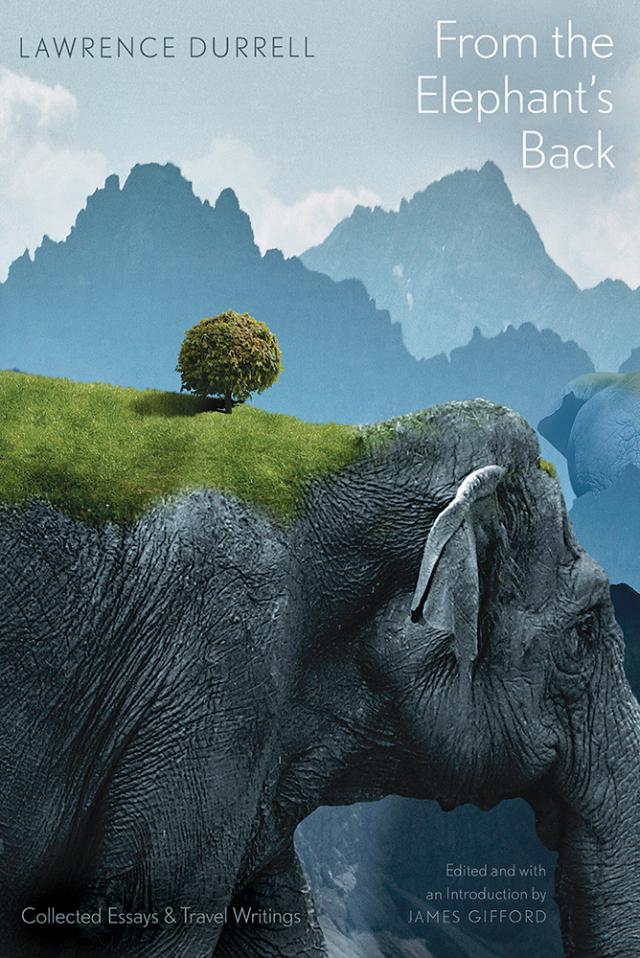
From the Elephant's Back: Collected Essays & Travel Writings

From the Elephant's Back: Collected Essays & Travel Writings

Lawrence Durrell

Literature & Fiction / Travel / Memoir

"This collection has a straightforward ambition: to redirect the interpretive perspective that readers bring to Lawrence Durrell's literary works by returning their attention to his short prose." - From the Introduction Best known for his novels and travel writing, Lawrence Durrell defied easy classification within twentieth-century modernism. His anti-authoritarian tendencies put him at odds with many contemporaries-aesthetically and politically. However, thanks to a compelling recontextualization by editor James Gifford, these 38 previously unpublished or out-of-print essays and letters reveal that Durrell's maturation as an artist was rich, complex, and subtle. This edition promises to open up new approaches to interpreting his more famous works. Durrell fans will treasure this selection of rare nonfiction, while scholars of Durrell, Modernist literature, anti-authoritarian artists, and the Personalist movement will also appreciate Gifford's fine editorial work.
Read online
  • 712
Stiff Upper Lip

Stiff Upper Lip

Lawrence Durrell

Literature & Fiction / Travel / Memoir

In this boisterous story collection, mischief abounds in the quiet corners of the British Empire on which the sun never setsAs the overseer of the kitchen at the British embassy in Vulgaria, De Mandeville has begun to abuse his power. He subjects the King's guests to a blistering Madras curry, a French onion soup served without spoons, and a table so loaded with vegetation that the party can hardly see the food. But worst of all, he has begun to cook with garlic, that fragrant bulb so beloved by diplomats that it must be banned, lest foul breath cripple the Empire. De Mandeville is due for comeuppance, and no breath mint can save him now."If Garlic Be the Food of Love" is only the first story in this invaluable peek at life in British diplomatic circles. After the ninth, the reader will wonder not how the British Empire came apart, but how De Mandeville, Polk-Mowbray, and the King's other dips ever got it started in the first place.
Read online
  • 710
Sicilian Carousel

Sicilian Carousel

Lawrence Durrell

Literature & Fiction / Travel / Memoir

Although Durrell spent much of his life beside the Mediterranean, he wrote relatively little about Italy; it was always somewhere that he was passing through on the way to somewhere else. Sicilian Carousel is his only piece of extended writing on the country and, naturally enough for the islomaniac Durrell, it focuses on one of Italy's islands. Sicilian Carousel came relatively late in Durrell's career, and is based around a slightly fictionalized bus tour of the island.
Read online
  • 632
Judith

Judith

Lawrence Durrell

Literature & Fiction / Travel / Memoir

A breathtaking novel of passion and politics, set in the hotbed of Palestine in the 1940s, by a master of twentieth-century fiction It is the eve of Britain’s withdrawal from Palestine in 1948, a moment that will mark the beginning of a new Israel. But the course of history is uncertain, and Israel’s territorial enemies plan to smother the new country at its birth. Judith Roth has escaped the concentration camps in Germany only to be plunged into the new conflict, one with stakes just as high for her as they are for her people. Initially conceived as a screenplay for the 1966 film starring Sophia Loren, Lawrence Durrell’s previously unpublished novel offers a thrilling portrayal of a place and time when ancient history crashed against the fragile bulwarks of the modernizing world. This ebook features an introduction by editor Richard Pine, which puts Judith in context with Durrell’s body of work and traces the fascinating development of the novel. Also included is an illustrated biography of Lawrence Durrell containing rare images and never-before-seen documents from the author’s estate and the British Library’s modern manuscripts collection.
Read online
  • 1 138
Bitter Lemons of Cyprus

Bitter Lemons of Cyprus

Lawrence Durrell

Literature & Fiction / Travel / Memoir

Bitter Lemons of Cyprus is Lawrence Durrell's unique account of his time in Cyprus, during the 1950s Enosis movement for freedom of the island from British colonial rule. Winner of the Duff Cooper Memorial Prize, it is a document at once personal, poetic and subtly political - a masterly combination of travelogue, memoir and treatise. 'He writes as an artist, as well as a poet; he remembers colour and landscape and the nuances of peasant conversation . . . Eschewing politics, it says more about them than all our leading articles . . . In describing a political tragedy it often has great poetic beauty.' Kingsley Martin, New Statesman 'Durrell possesses exceptional qualifications. He speaks Greek fluently; he has a wide knowledge of modern Greek history, politics and literature; he has lived in continental Greece and has spent many years in other Greek islands . . . His account of this calamity is revelatory, moving and restrained. It is written in the sensitive and muscular prose of which he is so consummate a master.' Harold Nicolson, Observer
Read online
  • 610
A Smile in the Mind's Eye

A Smile in the Mind's Eye

Lawrence Durrell

Literature & Fiction / Travel / Memoir

Durrell's remarkable memoir of his spiritual journey with famed Taoist philosopher Jolan ChangBeginning with their first meeting over lunch at Lawrence Durrell's Provencal home, Durrell and Jolan Chang—renowned Taoist philosopher and expert on Eastern sexuality—developed an enduring relationship based on mutual spiritual exploration. Durrell's autobiographical rumination on their friendship and on Taoism recounts the author's existential ponderings, starting with his introduction to the mystical and enigmatic "smile in the mind's eye." From parsimony, cooking, and yoga to poetry, Petrarch, and Nietzche, A Smile in the Mind's Eye is a charming tale of a writer's spiritual and philosophical awakening.
Read online
  • 524
Blue Thirst

Blue Thirst

Lawrence Durrell

Literature & Fiction / Travel / Memoir

A pair of lectures from one of the twentieth century’s most mesmerizing speakers Lawrence Durrell was in his early twenties when, tired of the stiffness of London life, he took his family to live in Corfu. Interwar Greece, whose hard beds and mosquito swarms Durrell documented so tenderly in Prospero’s Cell, was no more. In the first of this pair of lectures, given during a 1970s visit to California, Durrell recalls those days, talking of family, poetry, and the joy of the islands as no other writer can. When war came to the Mediterranean, Durrell was swept into diplomatic service, an adventure he recounts in his second lecture. Though a diplomat of the modern world, he served under men whose experience stretched back to the days before the telephone, when solutions for crises had to be devised by the ambassador, and not phoned in from London. These two lectures on long-vanished worlds are an elegant demonstration of the evocative power of Durrell’s unmatched storytelling.
Read online
  • 347
Collected Poems 1931-74

Collected Poems 1931-74

Lawrence Durrell

Literature & Fiction / Travel / Memoir

I have arranged these poems, not according to chronology but in what I hope is the most easily readable form. Nothing has been included from the two earliest pamphlets. I date my poetic appearance from the publication of "A Private Country" in 1943. Poems from the following volumes have been included: "Poems" edited by Oswell Blakeston (Fortune Press, 1938); "A Private Country" (Faber and Faber, 1943); "Cities, Plains and People" (Faber and Faber, 1946); "On Seeming to Presume" (Faber and Faber, 1948); "Sappho: a play in verse" (Faber and Faber, 1950); "The Tree of Idleness" (Faber and Faber, 1955); and "Private Drafts" (privately printed in Nicosia, Cyprus, 1955). L.D.
Read online
  • 275
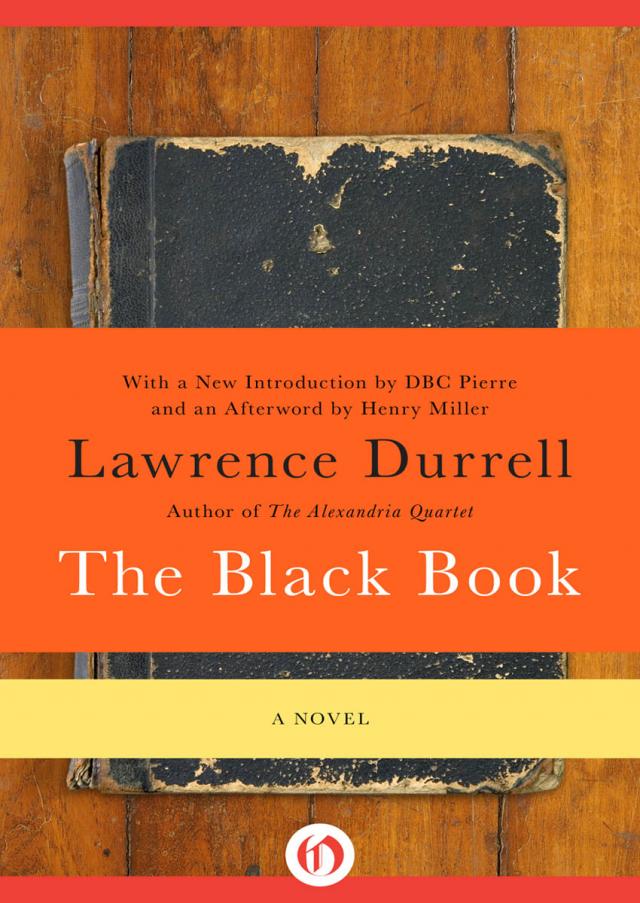
The Black Book

The Black Book

Lawrence Durrell

Literature & Fiction / Travel / Memoir

Durrell's third work, the original angry young novel, was first published by his good friend and long-time correspondent Henry Miller as the first title in the short-lived Villa Seurat imprint of the Paris-based Obelisk Press. Unpublishable by the more staid (and censored) presses across the Channel, no work better captures the anguish and death-consciousness of a Europe about to plunge, once again, into cataclysmic war and destruction. The Black Book first saw print in 1938.
Read online
  • 684
The Dark Labyrinth

The Dark Labyrinth

Lawrence Durrell

Literature & Fiction / Travel / Memoir

This captivating Mediterranean novel was written by Lawrence Durrell immediately after finishing his exquisite vignette about Corfu, Prospero's Cell, and a decade before Justine. The story is set on Crete just after the War, as an odd assortment of English travellers come ashore from a cruise ship to explore the island and in particular to examine a dangerous local labyrinth. They include an extrovert painter, a spiritualist, a Protestant spinster with a fox terrier, an antiquarian peer and minor poet, a soldier with guilty memories of the Cretan resistance, a pretty convalescent and an eccentric married couple. To some extent the book is a roman à clef and Durrell's characters talk with great reality about their experiences, themselves and a certain psychological unease that has led most of them to embark on their journey. The climax is a disastrous visit to the labyrinth, with its reported minotaur. The novel is a gripping piece of story-telling, full of atmosphere and the vivid first-hand writing about Mediterranean landscape and people of which Durrell was a master. [ Cefalu (1947; republished as The Dark Labyrinth in 1958) ]
Read online
  • 171
Desert Solitaire: A Season in the Wilderness

Desert Solitaire: A Season in the Wilderness

Edward Abbey

Fiction / Travel / Memoir

First published in 1968, Desert Solitaire is one of Edward Abbey’s most critically acclaimed works and marks his first foray into the world of nonfiction writing. Written while Abbey was working as a ranger at Arches National Park outside of Moab, Utah, Desert Solitaire is a rare view of one man’s quest to experience nature in its purest form. Through prose that is by turns passionate and poetic, Abbey reflects on the condition of our remaining wilderness and the future of a civilization that cannot reconcile itself to living in the natural world as well as his own internal struggle with morality. As the world continues its rapid development, Abbey’s cry to maintain the natural beauty of the West remains just as relevant today as when this book was written.
Read online
  • 834
The Fool's Progress

The Fool's Progress

Edward Abbey

Fiction / Travel / Memoir

The Fool's Progress, the "fat masterpiece" as Edward Abbey labeled it, is his most important piece of writing: it reveals the complete Ed Abbey, from the green grass of his memory as a child in Appalachia to his approaching death in Tuscon at age sixty two. When his third wife abandons him in Tucson, boozing, misanthropic anarchist Henry Holyoak Lightcap shoots his refrigerator and sets off in a battered pick-up truck for his ancestral home in West Virginia. Accompanied only by his dying dog and his memories, the irascible warhorse (a stand-in for the "real" Abbey) begins a bizarre cross-country odyssey—determined to make peace with his past—and to wage one last war against the ravages of "progress.""A profane, wildly funny, brash, overbearing, exquisite tour de force." — The Chicago Tribune
Read online
  • 555
The Best of Edward Abbey

The Best of Edward Abbey

Edward Abbey

Fiction / Travel / Memoir

Here is the only collection of writings compiled by Abbey himself, who writes in his own words, "to present what I think is both the best and most representative of my writing--so far." Included in this collection are generous selections of his best novels, such as The Brave Cowboy, Black Sun, and his classic The Monkey Wrench Gang, as well as many of his other, more expressive and acerbic essays. To add further interest, Abbey’s own sketches are scattered throughout the text. This rich offering of fiction and prose is a testament to a singular American author, and offers an opportunity to become better acquainted with his abundant body of work.
Read online

  • 895
The Monkey Wrench Gang

The Monkey Wrench Gang

Edward Abbey

Fiction / Travel / Memoir

Ed Abbey called The Monkey Wrench Gang, his 1975 novel, a "comic extravaganza." Some readers have remarked that the book is more a comic book than a real novel, and it's true that reading this incendiary call to protect the American wilderness requires more than a little of the old willing suspension of disbelief. The story centers on Vietnam veteran George Washington Hayduke III, who returns to the desert to find his beloved canyons and rivers threatened by industrial development. On a rafting trip down the Colorado River, Hayduke joins forces with feminist saboteur Bonnie Abbzug, wilderness guide Seldom Seen Smith, and billboard torcher Doc Sarvis, M.D., and together they wander off to wage war on the big yellow machines, on dam builders and road builders and strip miners. As they do, his characters voice Abbey's concerns about wilderness preservation ("Hell of a place to lose a cow," Smith thinks to himself while roaming through the canyonlands of southern Utah. "Hell of a place to lose your heart. Hell of a place... to lose. Period"). Moving from one improbable situation to the next, packing more adventure into the space of a few weeks than most real people do in a lifetime, the motley gang puts fear into the hearts of their enemies, laughing all the while. It's comic, yes, and required reading for anyone who has come to love the desert.
Read online

  • 1 057
Hayduke Lives!

Hayduke Lives!

Edward Abbey

Fiction / Travel / Memoir

George Washington Hayduke III was last seen clinging to a rock face in the wilds of Utah as an armed posse hunted him down for his eco-radicalist crimes. Now he is back with a fiery need for vengeance. In this sequel to the enormously popular and entertaining The Monkey Wrench Gang, Hayduke teams up with his old pals Doc Sarvis, Seldom Seen Smith, and Bonnie Abbzug in a battle against the world’s biggest earth-moving machine. Fundamentalist preacher Dudley Love, the mastermind behind "G O L I A T H," wants to turn the Grand Canyon into a uranium mine, but not if eco-warrior Hayduke and his group of committed environmentalist friends have anything to say about it. Hayduke Lives! is full of noisy politics and seemingly improbable situations (yet all too real) that showcase Abbey’s energetic prose and his infectious comic genius as a writer.
Read online
  • 239
The Brave Cowboy

The Brave Cowboy

Edward Abbey

Fiction / Travel / Memoir

Jack Burns is a cowboy and a man out of time. He has a steadfast refusal to accept the what he perceives as the tyranny of the twentieth century world he lives in and instead, Burns opts to ride his feisty chestnut mare across the New West--what was once a beautiful, unblemished land but that is now tarnished by airstrips and superhighways. He rejects contemporary society, refuses to register for the draft, and cuts down any and all fences he encounters. It is this personal code of ethics and way of being that get Jack into trouble with the law, and soon enough he finds himself running from the very thing that could break his spirit--a fight for his freedom which, if caught, he may have to swap for the confinement of a grubby jail cell. The novel was adapted into the 1962 film Lonely Are the Brave starring Kirk Douglas.
Read online

  • 602
Fire on the Mountain

Fire on the Mountain

Edward Abbey

Fiction / Travel / Memoir

Grandfather John Vogelin's land is his life -- a barren stretch of New Mexican wilderness, mercifully bypassed by civilization. Then the government moves in. And suddenly the elderly, mule-stubborn rancher is confronting the combined land-grabbing greed of the County Sheriff, the Department of the Interior, the Atomic Energy Commission and the U.S. Air Force. But a tough old man is like a mountain lion: if you back hom into a conner, he'll come out fighting.
Read online
  • 1 114
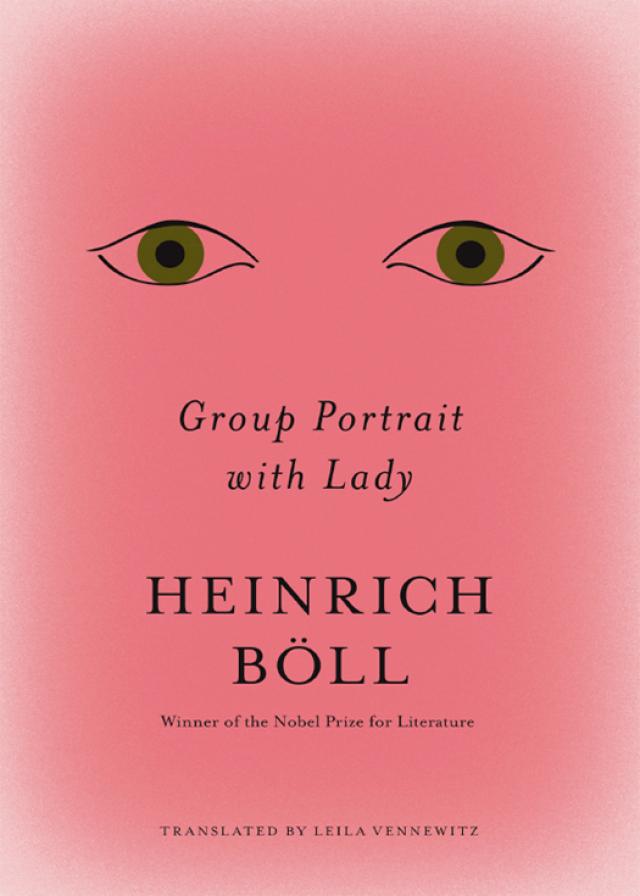
Group Portrait With Lady

Group Portrait With Lady

Heinrich Böll

Literature & Fiction / Travel / Short Stories
Cited by the Nobel Prize committee as the “crown” of Heinrich Böll’s work, the gripping story of Group Portrait With Lady unspools like a suspenseful documentary. Via a series of tense interviews, an unnamed narrator uncovers the story—past and present—of one of Böll’s most intriguing characters, the enigmatic Leni Pfeiffer, a struggling war widow. At the center of her struggle is her effort to prevent the demolition of her Cologne apartment building, a fight in which she is joined by a motley group of neighbors. Along with her illegitimate son, Lev, she becomes the nexus of a countercultural group rebelling against Germany’s dehumanizing past under the Nazis ... and what looks to be an equally dehumanizing future under capitalism. From the Trade Paperback edition.
Read online
  • 888
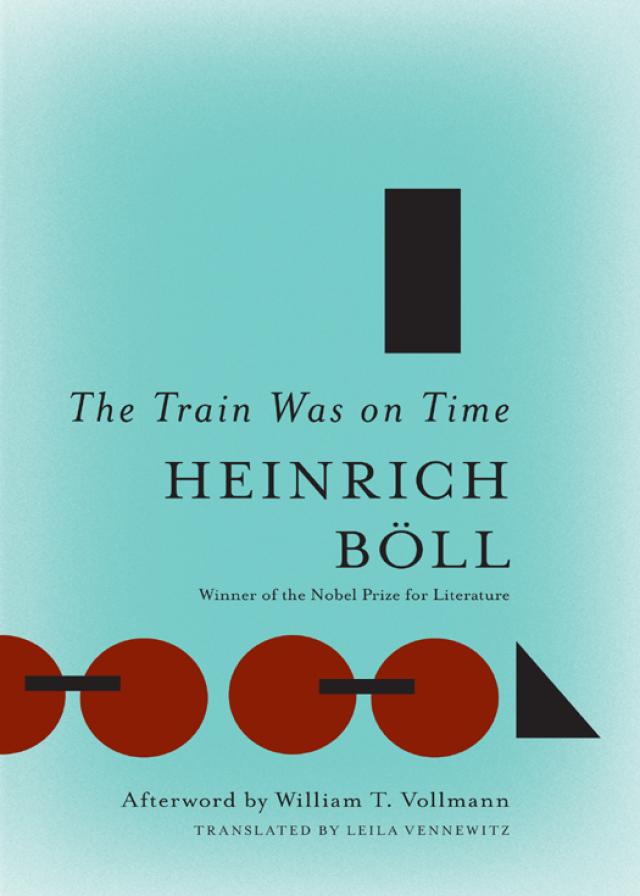
The Train Was on Time

The Train Was on Time

Heinrich Böll

Literature & Fiction / Travel / Short Stories

Heinrich Böll’s taut and haunting first novel tells the story of twenty-four-year-old Private Andreas as he journeys on a troop train across the German countryside to the Eastern front. Trapped, he knows that Hitler has already lost the war ... yet he is suddenly galvanized by the thought that he is on the way to his death. As the train hurtles on, he riffs through prayers and memories, talks with other soldiers about what they’ve been through, and gazes desperately out the window at his country racing away. With mounting suspense, Andreas is gripped by one thought over all: Is there a way to defy his fate? From the Trade Paperback edition.
Read online
  • 718
What's to Become of the Boy?: Or, Something to Do With Books

What's to Become of the Boy?: Or, Something to Do With Books

Heinrich Böll

Literature & Fiction / Travel / Short Stories

A vivid account of growing up poor, rebellious, and anti-Fascist in Nazi Germany What’s to Become of the Boy? is a spirited, insightful, and wonderfully sympathetic memoir about life during wartime written with the characteristic brilliance by one of the 20th-century’s most celebrated authors. It is both an essential autobiography of the Nobel Prizewinning author and a compelling memoir of being young and idealistic during an age of hardship and war. From the Trade Paperback edition.
Read online
  • 444
Irish Journal

Irish Journal

Heinrich Böll

Literature & Fiction / Travel / Short Stories

A unique entry in the Böll library, Irish Journal records an eccentric tour of Ireland in the 1950's. An epilogue written fourteen years later reflects on the enormous changes to the country and the people that Böll loved. Irish Journal is a time capsule of a land and a way of life that has disappeared. From the Trade Paperback edition.
Read online
  • 592
The Collected Stories of Heinrich Böll

The Collected Stories of Heinrich Böll

Heinrich Böll

Literature & Fiction / Travel / Short Stories

The definitive short story collection by the Nobel Laureate and master of the form These diverse, psychologically rich, and morally profound stories explore the consequences of war on individuals and on an entire culture. The Collected Stories of Heinrich Böll provides readers with the only comprehensive collection by this master of the short-story form. Includes all the stories from Böll’s The Mad Dog, Eighteen Short Stories, The Casualty, and The Stories of Heinrich Böll. A Nobel Laureate, Böll was considered a master 20th century literature, and The Collected Stories of Heinrich Böll contains some of his finest work. From the Trade Paperback edition.
Read online
  • 926
Billiards at Half-Past Nine

Billiards at Half-Past Nine

Heinrich Böll

Literature & Fiction / Travel / Short Stories

Böll’s well-known opposition to fascism and war informs this moving story of a single day in the life of traumatized soldier Robert Faehmel, scion of a family of successful Cologne architects, as he struggles to return to ordinary life after the Second World War. An encounter with a war-time nemesis, now a power in the reconstruction of Germany, forces him to confront private memories and the wounds of Germany’s defeat in the two World Wars.
Read online
  • 778
The Safety Net

The Safety Net

Heinrich Böll

Literature & Fiction / Travel / Short Stories

Fritz Tolm has risen to the most powerful position in Germany. With fame comes fear and vulnerability. Threats to his life are met with the all-pervasive “safety-net” of police protection and surveillance. Trapped in a house they dare not leave, where every visitor is suspect and every object a potential bomb, Tolm and his family wait to discover when and how terrorism will overtake them.
Read online
  • 513
The Clown

The Clown

Heinrich Böll

Literature & Fiction / Travel / Short Stories

Acclaimed entertainer Hans Schneir collapses when his beloved Marie leaves him because he won’t marry her within the Catholic Church. The desertion triggers a searing re-examination of his life—the loss of his sister during the war, the demands of his millionaire father and the hypocrisies of his mother, who first fought to “save” Germany from the Jews, then worked for “reconciliation” afterwards. Heinrich Böll’s gripping consideration of how to overcome guilt and live up to idealism—how to find something to believe in—gives stirring evidence of why he was such an unwelcome presence in post-War German consciousness . . . and why he was such a necessary one.
Read online
  • 717
Literary Occasions: Essays

Literary Occasions: Essays

V. S. Naipaul

Fiction / Nonfiction / Travel

Nobel laureate V. S. Naipaul brings his signature gifts of observation, his ferocious impatience with received truths, and his masterfully condensed prose to these eleven essays on reading, writing, and identity—which have been brought together for the first time. Here the subject is Naipaul’s literary evolution: the books that delighted him as a child; the books he wrote as a young man; the omnipresent predicament of trying to master an essentially metropolitan, imperial art form as an Asian colonial from a New World plantation island. He assesses Joseph Conrad, the writer most frequently cited as his forebear, and, in his celebrated Nobel Lecture, “Two Worlds,” traces the full arc of his own career. Literary Occasions is an indispensable addition to the Naipaul oeuvre, penetrating, elegant, and affecting. From the Trade Paperback edition.
Read online
  • 981
Guerrillas

Guerrillas

V. S. Naipaul

Fiction / Nonfiction / Travel

An expatriate English couple and a West Indian would-be revolutionary yield to infidelity, sexual abuse, murder, and irrevocable mental and moral decay on a socially fragile, post-colonial Caribbean island. A novel of colonialism and revolution, death, sexual violence and political and spiritual impotence.
Read online
  • 476
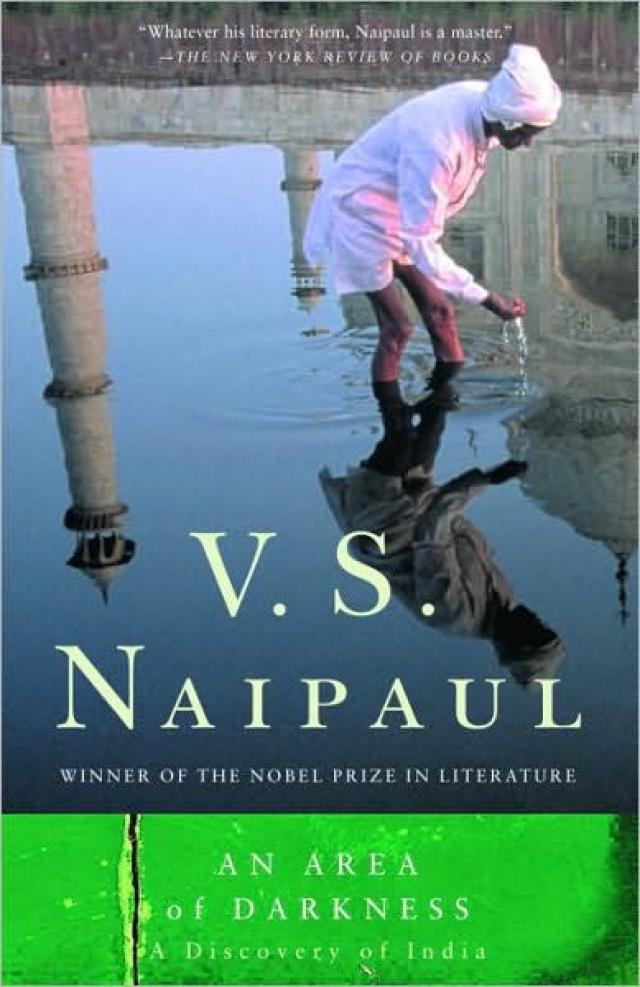
An Area of Darkness

An Area of Darkness

V. S. Naipaul

Fiction / Nonfiction / Travel

A classic of modern travel writing, An Area of Darkness is Nobel laureate V. S. Naipaul’s profound reckoning with his ancestral homeland and an extraordinarily perceptive chronicle of his first encounter with India. Traveling from the bureaucratic morass of Bombay to the ethereal beauty of Kashmir, from a sacred ice cave in the Himalayas to an abandoned temple near Madras, Naipaul encounters a dizzying cross-section of humanity: browbeaten government workers and imperious servants, a suavely self-serving holy man and a deluded American religious seeker. An Area of Darkness also abounds with Naipaul’s strikingly original responses to India’s paralyzing caste system, its apparently serene acceptance of poverty and squalor, and the conflict between its desire for self-determination and its nostalgia for the British raj. The result may be the most elegant and passionate book ever written about the subcontinent. From the Trade Paperback edition.
Read online
  • 994
Miguel Street

Miguel Street

V. S. Naipaul

Fiction / Nonfiction / Travel

“A stranger could drive through Miguel Street and just say ‘Slum!’ because he could see no more.” But to its residents this derelict corner of Trinidad’s capital is a complete world, where everybody is quite different from everybody else. There’s Popo the carpenter, who neglects his livelihood to build “the thing without a name.” There’s Man-man, who goes from running for public office to staging his own crucifixion, and the dreaded Big Foot, the bully with glass tear ducts. There’s the lovely Mrs. Hereira, in thrall to her monstrous husband. In this tender, funny early novel, V. S. Naipaul renders their lives (and the legends their neighbors construct around them) with Dickensian verve and Chekhovian compassion. Set during World War II and narrated by an unnamed–but precociously observant–neighborhood boy, Miguel Street is a work of mercurial mood shifts, by turns sweetly melancholy and anarchically funny. It overflows with life on every page. From the Trade Paperback edition.
Read online
  • 187
A Bend in the River

A Bend in the River

V. S. Naipaul

Fiction / Nonfiction / Travel

Set in an unnamed African country, the book is narrated by Salim, a young man from an Indian family of traders long resident on the coast. He believes The world is what it is; men who are nothing, who allow themselves to become nothing, have no place in it. So he has taken the initiative; left the coast; acquired his own shop in a small, growing city in the continents’s remote interior and is selling sundries - little more than this and that really - to the natives. This spot, this ‘bend in the river’, is a microcosm of post-colonial Africa at the time of Independence: a scene of chaos, violent change, warring tribes, ignorance, isolation and poverty. And from this rich landscape emerges one of the author’s most potent works - a truly moving story of historical upheaval and social breakdown.
Read online
  • 164
In a Free State

In a Free State

V. S. Naipaul

Fiction / Nonfiction / Travel

No writer has rendered our boundariless, post-colonial world more acutely or prophetically than V. S. Naipaul, or given its upheavals such a hauntingly human face. A perfect case in point is this riveting novel, a masterful and stylishly rendered narrative of emigration, dislocation, and dread, accompanied by four supporting narratives. In the beginning it is just a car trip through Africa. Two English people - Bobby, a civil servant with a guilty appetite for African boys, and Linda, a supercilious 'compound wife' - are driving back to their enclave after a stay in the capital. But in between lies the landscape of an unnamed country whose squalor and ethnic bloodletting suggest Idi Amin’s Uganda. And the farther Naipaul’s protagonists travel into it, the more they find themselves crossing the line that separates privileged outsiders from horrified victims. Alongside this Conradian tour de force are four incisive portraits of men seeking liberation far from home. By turns funny and terrifying, sorrowful and unsparing, In A Free State is Naipaul at his best.
Read online
  • 691
Beyond Belief: Islamic Excursions Among the Converted Peoples

Beyond Belief: Islamic Excursions Among the Converted Peoples

V. S. Naipaul

Fiction / Nonfiction / Travel

"Brilliant. . . . A powerfully observed, stylistically elegant exploration." --The New York Times A New York Times Notable Book of the Year "The book's strength lies in Naipaul's extraordinary ability as a storyteller to draw striking portraits of a cross section of individuals."--The Boston Globe Fourteen years after the publication of his landmark travel narrative Among the Believers, V. S. Naipaul returned to the four non-Arab Islamic countries he reported on so vividly at the time of Ayatollah Khomeini's triumph in Iran. Beyond Belief is the result of his five-month journey in 1995 through Indonesia, Iran, Pakistan, and Malaysia--lands where descendants of Muslim converts live at odds with indigenous traditions, and where dreams of Islamic purity clash with economic and political realities. In extended conversations with a vast number of people--a rare survivor of the martyr brigades of the Iran-Iraq war, a young intellectual training as a Marxist guerilla in Baluchistan, an impoverished elderly couple in Teheran whose dusty Baccarat chandeliers preserve the memory of vanished wealth, and countless others--V. S. Naipaul deliberately effaces himself to let the voices of his subjects come through. Yet the result is a collection of stories that has the author's unmistakable stamp. With its incisive observation and brilliant cultural analysis, Beyond Belief is a startling and revelatory addition to the Naipaul canon. "Highly accomplished. . . . Another display of Naipaul's remarkable talent." --The Independent (London)
Read online
  • 682
The Masque of Africa: Glimpses of African Belief

The Masque of Africa: Glimpses of African Belief

V. S. Naipaul

Fiction / Nonfiction / Travel

Like all of V. S. Naipaul’s “travel” books, The Masque of Africa encompasses a much larger narrative and purpose: to judge the effects of belief (in indigenous animisms, the foreign religions of Christianity and Islam, the cults of leaders and mythical history) upon the progress of civilization. From V. S. Naipaul: “For my travel books I travel on a theme. And the theme of The Masque of Africa is African belief. I begin in Uganda, at the center of the continent, do Ghana and Nigeria, the Ivory Coast and Gabon, and end at the bottom of the continent, in South Africa. My theme is belief, not political or economical life; and yet at the bottom of the continent the political realities are so overwhelming that they have to be taken into account. “Perhaps an unspoken aspect of my inquiry was the possibility of the subversion of old Africa by the ways of the outside world. The theme held until I got to the South, when the clash of the two ways of thinking and believing became far too one-sided. The skyscrapers of Johannesburg didn’t rest on sand. The older world of magic felt fragile, but at the same time had an enduring quality. You felt that it would survive any calamity. “I had expected that over the great size of Africa the practices of magic would significantly vary. But they didn’t. The diviners everywhere wanted to ‘throw the bones’ to read the future, and the idea of ‘energy’ remained a constant, to be tapped into by the ritual sacrifice of body parts. In South Africa body parts, mainly of animals, but also of men and women, made a mixture of ‘battle medicine.’ To witness this, to be given some idea of its power, was to be taken far back to the beginning of things. “To reach that beginning was the purpose of my book.” The Masque of Africa is a masterly achievement by one of the world’s keenest observers and one of its greatest writers. From the Hardcover edition.
Read online
  • 1 102
The Writer and the World: Essays

The Writer and the World: Essays

V. S. Naipaul

Fiction / Nonfiction / Travel

Spanning four decades and four continents, this magisterial volume brings together the essential shorter works of reflection and reportage by our most sensitive, literate, and undeceivable observer of the post-colonial world. In its pages V. S. Naipaul trains his relentless moral intelligence on societies from India to the United States and sees how each deals with the challenges of modernity and the seductions of both the real and mythical past. Whether he is writing about a string of racial murders in Trinidad; the mad, corrupt reign of Mobutu in Zaire; Argentina under the generals; or Dallas during the 1984 Republican Convention, Naipaul combines intellectual playfulness with sorrow, indignation, and analysis so far-reaching that it approaches prophecy. The Writer and the World reminds us that he is in a class by himself. From the Trade Paperback edition.
Read online
  • 416
A Turn in the South

A Turn in the South

V. S. Naipaul

Fiction / Nonfiction / Travel

In the tradition of political and cultural revelation V.S. Naipaul so brilliantly made his own in Among The Believers, A Turn In The South, his first book about the United States, is a revealing, disturbing, elegiac book about the American South -- from Atlanta to Charleston, Tallahassee to Tuskegee, Nashville to Chapel Hill. From the Trade Paperback edition.
Read online
  • 839
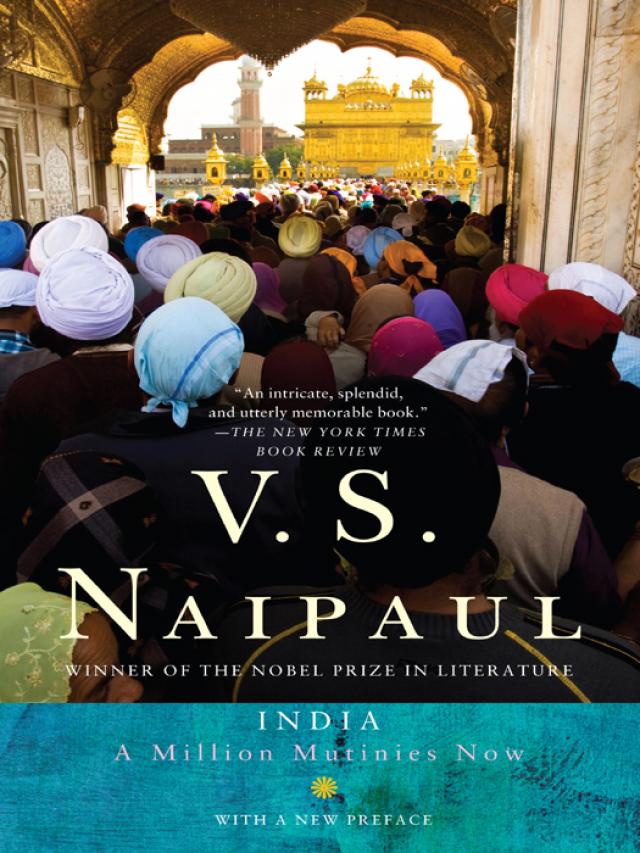
India: A Million Mutinies Now

India: A Million Mutinies Now

V. S. Naipaul

Fiction / Nonfiction / Travel

A New York Times Notable Book Nobel laureate V. S. Naipaul’s impassioned and prescient travelogue of his journeys through his ancestral homeland, with a new preface by the author. Arising out of Naipaul’s lifelong obsession and passion for a country that is at once his and totally alien, India: A Million Mutinies Now relates the stories of many of the people he met traveling there more than fifty years ago. He explores how they have been steered by the innumerable frictions present in Indian society—the contradictions and compromises of religious faith, the whim and chaos of random political forces. This book represents Naipaul’s last word on his homeland, complementing his two other India travelogues, An Area of Darkness and India: A Wounded Civilization.
Read online
  • 600
Half a Life

Half a Life

V. S. Naipaul

Fiction / Nonfiction / Travel

One of the finest living writers in the English language, V. S. Naipaul gives us a tale as wholly un- expected as it is affecting, his first novel since the exultantly acclaimed A Way in the World, published seven years ago. Half a Life is the story of Willie Chandran, whose father, heeding the call of Mahatma Gandhi, turned his back on his brahmin heritage and married a woman of low caste--a disastrous union he would live to regret, as he would the children that issued from it. When Willie reaches manhood, his flight from the travails of his mixed birth takes him from India to London, where, in the shabby haunts of immigrants and literary bohemians of the 1950s, he contrives a new identity. This is what happens as he tries to defeat self-doubt in sexual adventures and in the struggle to become a writer--strivings that bring him to the brink of exhaustion, from which he is rescued, to his amazement, only by the love of a good woman. And this is what happens when he returns with her--carried along, really--to her home in Africa, to live, until the last doomed days of colonialism, yet another life not his own. In a luminous narrative that takes us across three continents, Naipaul explores his great theme of inheritance with an intimacy and directness unsurpassed in his extraordinary body of work. And even as he lays bare the bitter comical ironies of assumed identities, he gives us a poignant spectacle of the enervation peculiar to a borrowed life. In one man's determined refusal of what he has been given to be, Naipaul reveals the way of all our experience. As Willie comes to see, Everything goes on a bias. The world should stop, but it goes on. A masterpiece of economy and emotional nuance, Half a Life is an indelible feat of the imagination. From the Hardcover edition.
Read online
  • 545
A House for Mr. Biswas

A House for Mr. Biswas

V. S. Naipaul

Fiction / Nonfiction / Travel

The early masterpiece of V. S. Naipaul’s brilliant career, A House for Mr. Biswas is an unforgettable story inspired by Naipaul's father that has been hailed as one of the twentieth century's finest novels. In his forty-six short years, Mr. Mohun Biswas has been fighting against destiny to achieve some semblance of independence, only to face a lifetime of calamity. Shuttled from one residence to another after the drowning death of his father, for which he is inadvertently responsible, Mr. Biswas yearns for a place he can call home. But when he marries into the domineering Tulsi family on whom he indignantly becomes dependent, Mr. Biswas embarks on an arduous–and endless–struggle to weaken their hold over him and purchase a house of his own. A heartrending, dark comedy of manners, A House for Mr. Biswas masterfully evokes a man’s quest for autonomy against an emblematic post-colonial canvas.
Read online
  • 573
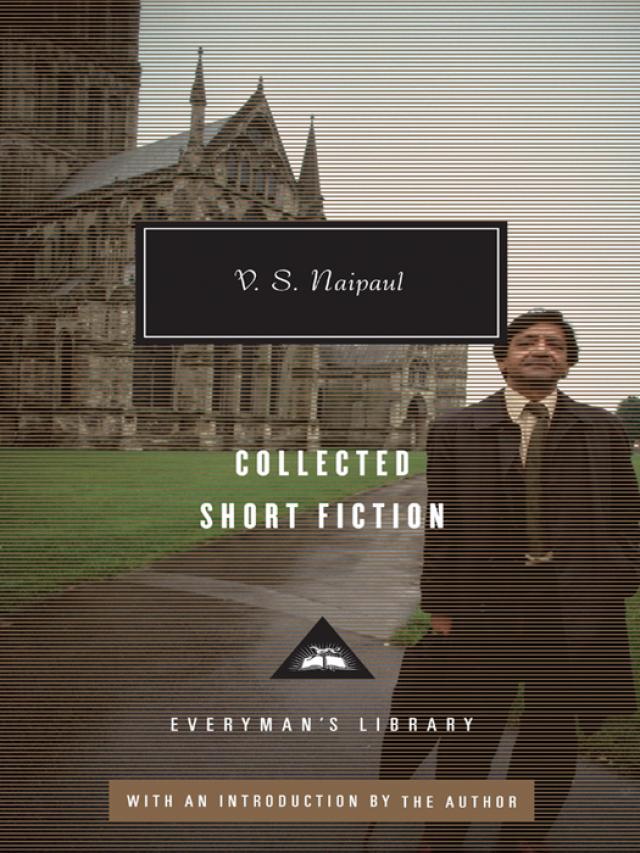
Collected Short Fiction

Collected Short Fiction

V. S. Naipaul

Fiction / Nonfiction / Travel

For the first time: the Nobel Prize winner’s stunning short fiction collected in one volume, with an introduction by the author. Over the course of his distinguished career, V. S. Naipaul has written a remarkable array of short fiction that moves from Trinidad to London to Africa. Here are the stories from his Somerset Maugham Award–winning Miguel Street (1959), in which he takes us into a derelict corner of Trinidad’s capital to meet, among others, Man-Man, who goes from running for public office to staging his own crucifixion. The tales in A Flag on the Island (1967), meanwhile, roam from a Chinese bakery in Trinidad to a rooming house in London. And in the celebrated title story from the Booker Prize– winning In a Free State (1971), an English couple traveling in an unnamed African country discover, under a veneer of civilization, a landscape of squalor and ethnic bloodletting. No writer has rendered our postcolonial world more acutely or prophetically than V. S. Naipaul, or given its upheavals such a hauntingly human face.
Read online
  • 611
The Middle Passage

The Middle Passage

V. S. Naipaul

Fiction / Nonfiction / Travel

In 1960 the government of Trinidad invited V. S. Naipaul to revisit his native country and record his impressions. In this classic of modern travel writing he has created a deft and remarkably prescient portrait of Trinidad and four adjacent Caribbean societies–countries haunted by the legacies of slavery and colonialism and so thoroughly defined by the norms of Empire that they can scarcely believe that the Empire is ending. In The Middle Passage, Naipaul watches a Trinidadian movie audience greeting Humphrey Bogart’s appearance with cries of “That is man!” He ventures into a Trinidad slum so insalubrious that the locals call it the Gaza Strip. He follows a racially charged election campaign in British Guiana (now Guyana) and marvels at the Gallic pretension of Martinique society, which maintains the fiction that its roads are extensions of France’s routes nationales. And throughout he relates the ghastly episodes of the region’s colonial past and shows how they continue to inform its language, politics, and values. The result is a work of novelistic vividness and dazzling perspicacity that displays Naipaul at the peak of his powers.
Read online
  • 373
A Way in the World

A Way in the World

V. S. Naipaul

Fiction / Nonfiction / Travel

Nobel Prize winner V. S. Naipaul intertwines memory and history to create an ambitious fictional archaeology of colonialism. Spanning continents and centuries and defying literary categories, A Way in the World tells intersecting stories whose protagonists include the disgraced and half-demented Sir Walter Raleigh who seeks El Dorado in the New World; the 19th century insurgent Francisco Miranda who becomes entangled in his own fantasies and borrowed ideas; and the doomed Blair, a present-day Caribbean revolutionary stranded in East Africa. Among these presences is a narrator who bears a telling resemblance to Naipaul himself: a Trinidadian writer of Indian ancestry and English residence boldly trying to come to terms with the mystery and transience that is his inheritance.
Read online
  • 1 071
Magic Seeds

Magic Seeds

V. S. Naipaul

Fiction / Nonfiction / Travel

Nobel laureate V. S. Naipaul’s magnificent Magic Seeds continues the story of Willie Chandran, the perennially dissatisfied and self-destructively naive protagonist of his bestselling Half a Life. Having left a wife and a livelihood in Africa, Willie is persuaded to return to his native India to join an underground movement on behalf of its oppressed lower castes. Instead he finds himself in the company of dilettantes and psychopaths, relentlessly hunted by police and spurned by the people he means to liberate. But this is only one stop in a quest for authenticity that takes in all the fanaticism and folly of the postmodern era. Moving with dreamlike swiftness from guerrilla encampment to prison cell, from the squalor of rural India to the glut and moral desolation of 1980s London, Magic Seeds is a novel of oracular power, dazzling in its economy and unblinking in its observations. From the Trade Paperback edition.
Read online
  • 301
The Mimic Men: A Novel

The Mimic Men: A Novel

V. S. Naipaul

Fiction / Nonfiction / Travel

A profound novel of cultural displacement, The Mimic Men masterfully evokes a colonial man’s experience in a postcolonial world. Born of Indian heritage and raised on a British-dependent Caribbean island, Ralph Singh has retired to suburban London, writing his memoirs as a means to impose order on a chaotic existence. His memories lead him to recognize the paradox of his childhood during which he secretly fantasized about a heroic India, yet changed his name from Ranjit Kripalsingh. As he assesses his short-lived marriage to an ostentatious white woman, Singh realizes what has kept him from becoming a proper Englishman. But it is the return home and his subsequent immersion in the roiling political atmosphere of a newly self-governed nation that ultimately provide Singh with the necessary insight to discover the crux of his disillusionment. From the Trade Paperback edition.
Read online
  • 737
183